PUBLICATIONS
PUBLICATIONS

GAMBIT CHESS BOOKS Founded 1997 by chess masters and grandmasters • over 2½ million books sold • More than 200 titles published • Print & Electronic formats • Translations into 17 languages Gambit Chess Studio 2:
All users should update to the latest version
to avoid problems with downloading books. In rare cases you may need to
restore transactions.
Latest updates
 6th October 2026 –
Grandmaster Secrets: Winning Quickly at Chess by John Nunn is
now also available for our app
Chess Studio 2. See
here for a full list of app
books, which are fully replayable on screen for iOS and Android
devices.
6th October 2026 –
Grandmaster Secrets: Winning Quickly at Chess by John Nunn is
now also available for our app
Chess Studio 2. See
here for a full list of app
books, which are fully replayable on screen for iOS and Android
devices.


 4th October 2026 –
Grandmaster Secrets: Winning Quickly at Chess by John Nunn is
now available in Kindle e-book format. In addition to an
English-language
edition, it can also be obtained in
French,
German,
Italian
and Portuguese.
The preceding links take you directly to the relevant Amazon pages.
4th October 2026 –
Grandmaster Secrets: Winning Quickly at Chess by John Nunn is
now available in Kindle e-book format. In addition to an
English-language
edition, it can also be obtained in
French,
German,
Italian
and Portuguese.
The preceding links take you directly to the relevant Amazon pages. 1st October 2026 – An additional 77 Kindle
translations in
French, German,
Italian, Spanish
and Portuguese are now available. Please click on the
appropriate link or use the buttons at the top to check the latest
additions.
23rd September 2026 – We have added a further batch of 93 Kindle
translations in
French, German,
Italian, Spanish
and Portuguese. Please click on the
appropriate link or use the buttons at the top to check the latest
additions.
15th September 2026 – Our new title
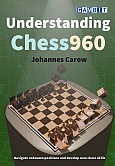
Understanding Chess960
is now available worldwide in both print and Kindle editions. The
English-language Kindle edition is available at
1st October 2026 – An additional 77 Kindle
translations in
French, German,
Italian, Spanish
and Portuguese are now available. Please click on the
appropriate link or use the buttons at the top to check the latest
additions.
23rd September 2026 – We have added a further batch of 93 Kindle
translations in
French, German,
Italian, Spanish
and Portuguese. Please click on the
appropriate link or use the buttons at the top to check the latest
additions.
15th September 2026 – Our new title
Understanding Chess960
is now available worldwide in both print and Kindle editions. The
English-language Kindle edition is available at
 ,
or
,
the print edition in softback at
,
or
or in hardback at ,
or
.
Additionally, the Kindle edition is available in other European languages at
and
.
15th September 2026 – Graham Burgess has updated his book
The Taimanov Sicilian
to include the latest analysis and computer-checking. The new
edition contains 60% extra material and is available in print
(softback and hardback) and Kindle editions. Go to
,
or
for copies.
5th August 2026 – We have added another large batch of Kindle
translations in
French, German,
Italian, Spanish
and Portuguese. Please click on the
appropriate link or use the buttons at the top to check the latest
additions.
26th July 2026 – In recognition of the increasing popularity of
Chess960, we will soon be releasing a guide to this exciting new form
of chess. The Kindle edition of
Understanding Chess960
is now available for pre-order at
,
or
.
26th July 2026 – We are constantly adding new Kindle translations in
French, German,
Italian, Spanish
and Portuguese. Please click on the
appropriate link or use the buttons at the top to check the latest
additions.
5 de julho de 2026 – Temos o prazer de anunciar que
as traduções para português de vários títulos best-sellers já estão
disponíveis no Kindle. Estas traduções foram geradas com recurso a inteligência
artificial e são, em geral, de boa qualidade. No entanto, uma vez que
contêm algumas pequenas imperfeições, estes títulos do Kindle estão
disponíveis ao preço de 6,99 €, o que representa um desconto em relação
ao nosso preço habitual no Kindle. O primeiro lote de traduções para
português inclui treze títulos:
Jogue a Alekhine,
Um repertório explosivo de aberturas de xadrez para as pretas,
Xadrez para a vida,
A Eslava,
Um repertório astuto de aberturas de xadrez para as brancas,
Vença com a Caro-Kann,
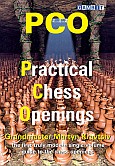
PCO: Aberturas práticas de xadrez,
A siciliana Taimanov,
Destaques do xadrez do século XX,
Segredos dos finais de peças menores,
Finais de xadrez de Nunn, volume 1,
Finais de xadrez de Nunn, volume 2 e
Repertório de aberturas de xadrez à prova de erros.
Visite a nossa página em português
para consultar a lista completa de títulos.
5 luglio 2026 – Siamo lieti di annunciare che sono ora disponibili su
Kindle le traduzioni in italiano di diversi titoli di successo. Queste
traduzioni sono state generate utilizzando l’intelligenza artificiale
e sono generalmente di buona qualità. Tuttavia, poiché presentano alcune
piccole imperfezioni, questi titoli Kindle sono disponibili al prezzo
di 6,99 €, che rappresenta uno sconto rispetto al nostro prezzo Kindle
abituale. La prima serie di traduzioni in italiano comprende tredici titoli:
Gioca l'Alekhine,
Un repertorio esplosivo di aperture scacchistiche per il Nero,
Scacchi per la vita,
La Slava,
Un astuto repertorio di aperture scacchistiche per il Bianco,
Vincere con la Caro-Kann,
PCO: Aperture scacchistiche pratiche,
La Siciliana Taimanov,
Il meglio degli scacchi del XX secolo,
Segreti dei finali di pezzi minori,
Finali di scacchi di Nunn, volume 1,
Finali di scacchi di Nunn, volume 2 e
Un repertorio di aperture scacchistiche infallibile.
Per l'elenco completo dei titoli, vi invitiamo a visitare la nostra
pagina in italiano.
5 de julio de 2026 – Hay otros títulos para Kindle disponibles
en español (traducidos por IA) que se pueden comprar directamente en
Amazon: PCO: Aperturas prácticas de ajedrez
o
y Un repertorio de aperturas de ajedrez infalible
o
.
Para consultar la lista completa de títulos en español, visita nuestra
página en español.
5. Juli 2026 – Einige weitere Kindle-Titel sind auf Deutsch (AI-übersetzt)
erhältlich und können direkt bei Amazon erworben werden:
Nunns Schachendspiele
Band 1, Nunns Schachendspiele,
Band 2 und Ein narrensicheres
Schacheröffnungsrepertoire. ,
or
,
the print edition in softback at
,
or
or in hardback at ,
or
.
Additionally, the Kindle edition is available in other European languages at
and
.
15th September 2026 – Graham Burgess has updated his book
The Taimanov Sicilian
to include the latest analysis and computer-checking. The new
edition contains 60% extra material and is available in print
(softback and hardback) and Kindle editions. Go to
,
or
for copies.
5th August 2026 – We have added another large batch of Kindle
translations in
French, German,
Italian, Spanish
and Portuguese. Please click on the
appropriate link or use the buttons at the top to check the latest
additions.
26th July 2026 – In recognition of the increasing popularity of
Chess960, we will soon be releasing a guide to this exciting new form
of chess. The Kindle edition of
Understanding Chess960
is now available for pre-order at
,
or
.
26th July 2026 – We are constantly adding new Kindle translations in
French, German,
Italian, Spanish
and Portuguese. Please click on the
appropriate link or use the buttons at the top to check the latest
additions.
5 de julho de 2026 – Temos o prazer de anunciar que
as traduções para português de vários títulos best-sellers já estão
disponíveis no Kindle. Estas traduções foram geradas com recurso a inteligência
artificial e são, em geral, de boa qualidade. No entanto, uma vez que
contêm algumas pequenas imperfeições, estes títulos do Kindle estão
disponíveis ao preço de 6,99 €, o que representa um desconto em relação
ao nosso preço habitual no Kindle. O primeiro lote de traduções para
português inclui treze títulos:
Jogue a Alekhine,
Um repertório explosivo de aberturas de xadrez para as pretas,
Xadrez para a vida,
A Eslava,
Um repertório astuto de aberturas de xadrez para as brancas,
Vença com a Caro-Kann,
PCO: Aberturas práticas de xadrez,
A siciliana Taimanov,
Destaques do xadrez do século XX,
Segredos dos finais de peças menores,
Finais de xadrez de Nunn, volume 1,
Finais de xadrez de Nunn, volume 2 e
Repertório de aberturas de xadrez à prova de erros.
Visite a nossa página em português
para consultar a lista completa de títulos.
5 luglio 2026 – Siamo lieti di annunciare che sono ora disponibili su
Kindle le traduzioni in italiano di diversi titoli di successo. Queste
traduzioni sono state generate utilizzando l’intelligenza artificiale
e sono generalmente di buona qualità. Tuttavia, poiché presentano alcune
piccole imperfezioni, questi titoli Kindle sono disponibili al prezzo
di 6,99 €, che rappresenta uno sconto rispetto al nostro prezzo Kindle
abituale. La prima serie di traduzioni in italiano comprende tredici titoli:
Gioca l'Alekhine,
Un repertorio esplosivo di aperture scacchistiche per il Nero,
Scacchi per la vita,
La Slava,
Un astuto repertorio di aperture scacchistiche per il Bianco,
Vincere con la Caro-Kann,
PCO: Aperture scacchistiche pratiche,
La Siciliana Taimanov,
Il meglio degli scacchi del XX secolo,
Segreti dei finali di pezzi minori,
Finali di scacchi di Nunn, volume 1,
Finali di scacchi di Nunn, volume 2 e
Un repertorio di aperture scacchistiche infallibile.
Per l'elenco completo dei titoli, vi invitiamo a visitare la nostra
pagina in italiano.
5 de julio de 2026 – Hay otros títulos para Kindle disponibles
en español (traducidos por IA) que se pueden comprar directamente en
Amazon: PCO: Aperturas prácticas de ajedrez
o
y Un repertorio de aperturas de ajedrez infalible
o
.
Para consultar la lista completa de títulos en español, visita nuestra
página en español.
5. Juli 2026 – Einige weitere Kindle-Titel sind auf Deutsch (AI-übersetzt)
erhältlich und können direkt bei Amazon erworben werden:
Nunns Schachendspiele
Band 1, Nunns Schachendspiele,
Band 2 und Ein narrensicheres
Schacheröffnungsrepertoire. 5 juillet 2026 – D’autres titres Kindle sont disponibles en français
(traduction par IA) et peuvent être achetés directement sur Amazon:
La Slave
,
La sicilienne Taimanov
,
Les finales de Nunn, volume 1
,
Les finales d'échecs de Nunn, volume 2
et Un répertoire d'ouvertures d'échecs infaillible
.
Pour consulter la liste complète des titres en français, rendez-vous
sur notre page en français.
30. Juni 2026 – Wir haben sechs weitere deutschsprachige Titel in Hardcover-Format
veröffentlicht, die direkt bei amazon.de erhältlich sind:
Erstürmung der Barrikaden,
Instruktive Meisterwerke aus der modernen Schachpraxis,
Lektionen zur Schachstrategie,
Perfektionieren
Sie Ihr Schach,
Schachaufgaben für die einsame Insel Sammelband und
Schachstrategie in Aktion.
30 de junio de 2026 – Nuestro libro «El camino hacia el progreso
en ajedrez» ya está disponible también en tapa dura directamente
en Amazon:
o
.
30th June 2026 – The second batch of new hardcover editions are now
also available direct from Amazon:
John Nunn’s Chess Puzzle Book,
Magnus Carlsen’s
Most Instructive Games,
Nunn’s Chess
Endings Volume 1,
Nunn’s Chess
Endings Volume 2, Problem Chess,
Secrets of Chess
Endgame Strategy,
Secrets of Grandmaster
Chess, Secrets
of Minor-Piece Endings,
Secrets of Pawnless
Endings, Solving in Style,
The Quickest
Chess Victories of All Time,
Understanding Rook
Endgames and Win with
the Caro-Kann.
29th June 2026 – We have expanded our range of popular hardcover editions.
The first batch of these is now available direct from Amazon:
1001 Deadly Checkmates,
1001 Deadly Chess Puzzles,
400 Chess Strategy Puzzles,
600 Modern Chess Puzzles,
A Course in Chess Tactics,
Chess for Life,
Chess Training
for Budding Champions,
Creative Chess
Opening Preparation,
Dynamic Pawn Play in
Chess, Endgame Challenge,
Grandmaster Chess
Move by Move, How
to Be Lucky in Chess,
How to Become
a Deadly Chess Tactician,
Instructive Chess
Miniatures and John
Nunn’s Best Games.
24 mai 2026 – Nous avons le plaisir d’annoncer la mise à disposition
de traductions en français pour Kindle de plusieurs titres populaires.
Ces traductions ont été générées à l’aide de l’intelligence
artificielle et sont globalement de bonne qualité. Toutefois, comme
elles comportent quelques imperfections mineures, ces titres Kindle
sont proposés au prix de 6,99€, ce qui représente une réduction par
rapport à notre prix Kindle habituel. La première série de traductions
en français comprend six titres: PCO: ouvertures d’échecs
pratiques
,
Les temps forts des échecs au XXe siècle
,
Secrets des finales de pièces mineures
,
Un répertoire d’ouvertures explosif pour les Noirs
,
Les échecs pour la vie
et Un répertoire d’ouvertures astucieux pour les Blancs
Pour consulter la liste complète des titres en français, rendez-vous
sur notre page en français.
5 juillet 2026 – D’autres titres Kindle sont disponibles en français
(traduction par IA) et peuvent être achetés directement sur Amazon:
La Slave
,
La sicilienne Taimanov
,
Les finales de Nunn, volume 1
,
Les finales d'échecs de Nunn, volume 2
et Un répertoire d'ouvertures d'échecs infaillible
.
Pour consulter la liste complète des titres en français, rendez-vous
sur notre page en français.
30. Juni 2026 – Wir haben sechs weitere deutschsprachige Titel in Hardcover-Format
veröffentlicht, die direkt bei amazon.de erhältlich sind:
Erstürmung der Barrikaden,
Instruktive Meisterwerke aus der modernen Schachpraxis,
Lektionen zur Schachstrategie,
Perfektionieren
Sie Ihr Schach,
Schachaufgaben für die einsame Insel Sammelband und
Schachstrategie in Aktion.
30 de junio de 2026 – Nuestro libro «El camino hacia el progreso
en ajedrez» ya está disponible también en tapa dura directamente
en Amazon:
o
.
30th June 2026 – The second batch of new hardcover editions are now
also available direct from Amazon:
John Nunn’s Chess Puzzle Book,
Magnus Carlsen’s
Most Instructive Games,
Nunn’s Chess
Endings Volume 1,
Nunn’s Chess
Endings Volume 2, Problem Chess,
Secrets of Chess
Endgame Strategy,
Secrets of Grandmaster
Chess, Secrets
of Minor-Piece Endings,
Secrets of Pawnless
Endings, Solving in Style,
The Quickest
Chess Victories of All Time,
Understanding Rook
Endgames and Win with
the Caro-Kann.
29th June 2026 – We have expanded our range of popular hardcover editions.
The first batch of these is now available direct from Amazon:
1001 Deadly Checkmates,
1001 Deadly Chess Puzzles,
400 Chess Strategy Puzzles,
600 Modern Chess Puzzles,
A Course in Chess Tactics,
Chess for Life,
Chess Training
for Budding Champions,
Creative Chess
Opening Preparation,
Dynamic Pawn Play in
Chess, Endgame Challenge,
Grandmaster Chess
Move by Move, How
to Be Lucky in Chess,
How to Become
a Deadly Chess Tactician,
Instructive Chess
Miniatures and John
Nunn’s Best Games.
24 mai 2026 – Nous avons le plaisir d’annoncer la mise à disposition
de traductions en français pour Kindle de plusieurs titres populaires.
Ces traductions ont été générées à l’aide de l’intelligence
artificielle et sont globalement de bonne qualité. Toutefois, comme
elles comportent quelques imperfections mineures, ces titres Kindle
sont proposés au prix de 6,99€, ce qui représente une réduction par
rapport à notre prix Kindle habituel. La première série de traductions
en français comprend six titres: PCO: ouvertures d’échecs
pratiques
,
Les temps forts des échecs au XXe siècle
,
Secrets des finales de pièces mineures
,
Un répertoire d’ouvertures explosif pour les Noirs
,
Les échecs pour la vie
et Un répertoire d’ouvertures astucieux pour les Blancs
Pour consulter la liste complète des titres en français, rendez-vous
sur notre page en français.For older news items, see our Gambit News Archive. This website is updated regularly and is for information
only. Gambit does not run a direct sales service.
|
||||||||||||||||||||||||||||